
With Server-Driven UI, Update Apps Instantly Without App Store Wait Times
You polish your app, squash bugs, add a new feature, and hit Publish. Then… you wait.
Hours, sometimes days, before your update goes live. Did Apple or Google reject it over some minor detail? Back to square one.
Beyond frustrating users, this means extra work for developers and teams who repeatedly invest time and resources in the approval process. How much effort could we save if this process were more efficient? Isn't it time we found a better solution?
That's why companies like Google and Airbnb are turning to Server-Driven UI (SDUI): apps that update instantly, no app store approval required. An alternative for Flutter apps is code push updates.
What is Server-Driven UI?
Server-Driven UI flips the traditional app model on its head.
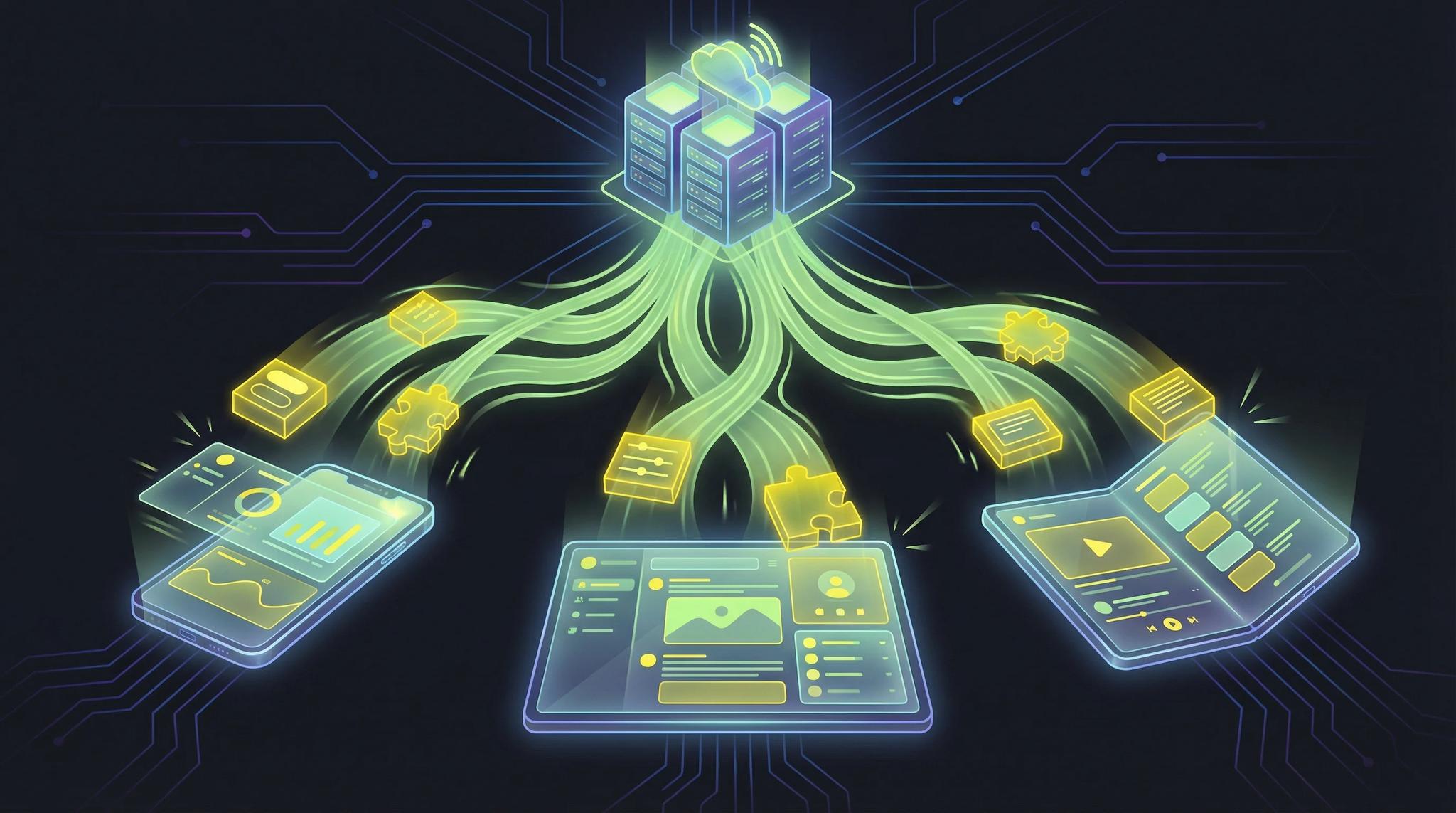
Instead of hard-coding every screen, the server sends UI instructions that the app renders dynamically. Individual UI components like buttons or banners can be flexibly controlled from the server.
Think of it this way:
- Traditional Apps: Like a printed book. Static and barely adaptable once shipped.
- SDUI Apps: Like a website. Layouts and content can be changed instantly from the server.
Server-Driven UI Architecture: The Technical Foundation
The UI logic moves to the server side, with the client serving merely as a flexible renderer.
The server controls which UI elements, layouts, and content are delivered to the client. This makes apps dynamic and eliminates the need for app store updates.
Centralized control enhances security and enables real-time adjustments for different platforms and user groups. SDUI is a game-changer for software development and modern user interfaces.
Real-World Implementation: How the Big Players Do It
Major companies are already leveraging SDUI successfully:
Airbnb uses their Ghost Platform and Epoxy Framework to rapidly deliver features across web, iOS, and Android.
Facebook (Meta) developed Litho for server-controlled layouts with native performance.
Lyft quickly tests new layouts and features across their global user base.
These production systems serve millions of users daily.
Why Do We Need SDUI?
The current update system is slow and expensive:
- Fix a bug → Submit update → wait.
- Add a feature → Submit update → wait.
- Run A/B tests → Submit update → wait.
SDUI solves this: UI components can be changed centrally and take effect everywhere instantly.
Is SDUI Really New?
Remote configs and feature flags have been around, but SDUI integrates deeply with frameworks like SwiftUI, Jetpack Compose, Flutter, and React Native. The UI remains native and dynamic, controlled by the server.
Benefits for Developers and Businesses
- Rapid updates without app store wait times.
- Cost savings through fewer release cycles.
- Better UX with always-current UI.
- Real-time experiments via A/B testing.
- Consistency across all platforms.
- Efficient collaboration between teams.
- Better support for content managers with flexible content.
Privacy and Personalization in the SDUI Era
Email addresses and user data are stored and processed centrally on the server. This makes it easier to comply with privacy regulations while offering personalized content.
Interactive components like FAQs or forms can be added dynamically without app updates.
SDUI Risks
- Complexity requires robust backend infrastructure.
- Performance can suffer without proper caching.
- Dependencies between frontend and backend need careful management.
- Security vulnerabilities can compromise UI integrity if poorly managed.
- Debugging becomes more challenging.
- Manipulation through dark patterns becomes easier.
Where This Could Lead
- App stores lose control over UI updates.
- Cross-platform development becomes more efficient.
- Faster innovation for startups and enterprises alike.
SDUI could redefine the future of app development.
Should Developers Care?
Absolutely. SDUI libraries are emerging for Flutter, SwiftUI, Jetpack Compose, and React Native. Freelancers and companies alike benefit from the speed and flexibility.
Conclusion
App store reviews slow down developers and businesses. SDUI eliminates wait times, reduces costs, and creates dynamic, responsive apps.
Server-Driven UI won't replace native apps, but it will eliminate the waiting game for updates.
The era of apps that never lag or stall has begun. SDUI guarantees high availability of current content and features.
If you're just starting to build your first app, SDUI might not be the right choice yet. But once your app grows and you're keeping track of ongoing costs, SDUI becomes a real competitive advantage.