
One Language, Everywhere: How Flutter and Serverpod Changed My Work
A few years ago, my work looked different. For a single project, I'd juggle between Swift, Kotlin, TypeScript, and Python. Four languages, four mental context switches, four different ecosystems. Every change to the data model meant: update the API, update the iOS app, update the Android app, hope nothing breaks.
Today I write apps with a single language. Frontend, backend, all Dart. And I don't want to go back.
The Pain of the Old World
If you're still working with separate stacks, you might know this:
- Double work: Implement every feature twice (iOS + Android), often with subtly different behavior.
- Double bugs: The same logic error, but debug it in two different languages.
- API contracts: Maintain JSON schemas, keep types manually in sync, track versioning in your head.
- Context switching: Think Swift in the morning, Kotlin in the afternoon, Node.js in the evening. Brain on fire.
For large teams with specialized developers, this works. For freelancers or small teams, it's a productivity killer.
Why Flutter?
When I first seriously tried Flutter in 2019, I was skeptical. Cross-platform frameworks had a bad reputation. React Native felt clunky, Xamarin was complicated, and hybrid apps with Cordova were just slow.
Flutter was different. A few things convinced me:
Hot Reload
Sounds trivial, but it's a game-changer. Save a change, UI updates instantly. No waiting, no restart. This changes how you develop: you experiment more, iterate faster, try things out.
A Real Single Codebase
Not "mostly shared with platform channels for everything important," but truly one codebase. 95%+ of the code runs identically on iOS and Android. Fix bugs once, build features once.
Performance
Flutter renders directly to the GPU, without bridging to native components. The result feels native. 60fps animations, no jank, no compromises. When Flutter hits its limits and you should reach for Rust is explained in Is Flutter fast enough?.
Dart
The language itself is pleasant. Type-safe, but not as verbose as Java. Null safety built in. Async/await feels natural. No semicolon wars like in JavaScript.
Serverpod: The Missing Puzzle Piece
Flutter elegantly solves the frontend problem. But what about the backend?
For a long time, that meant: back to Node.js, Python, or Go. Separate language, separate types, separate sources of error.
Then came Serverpod. A backend framework, completely written in Dart. And suddenly everything made sense.
What Makes Serverpod Different
- Shared Types: Define your data model once, use it in client and server. No manual JSON serialization, no keeping types in sync.
- Automatic API Generation: Serverpod generates type-safe client libraries. You call methods, not HTTP endpoints.
- One Language: Same Dart code, same tooling, same IDE. No context switching.
- Built-in Features: Authentication, database integration, WebSockets, caching, all included.
A Concrete Example
Previously, a simple API call looked like this:
- Backend: Define endpoint, build JSON response
- Update API documentation
- iOS: Build URL, send request, parse JSON, map types
- Android: Same thing again
- Tests: Separate for each platform
With Flutter + Serverpod:
- Serverpod: Write a method that returns a typed object
- Client: Call the generated method
- Done
The compiler checks if the types match. If the data model changes, the build fails before the code is even deployed.
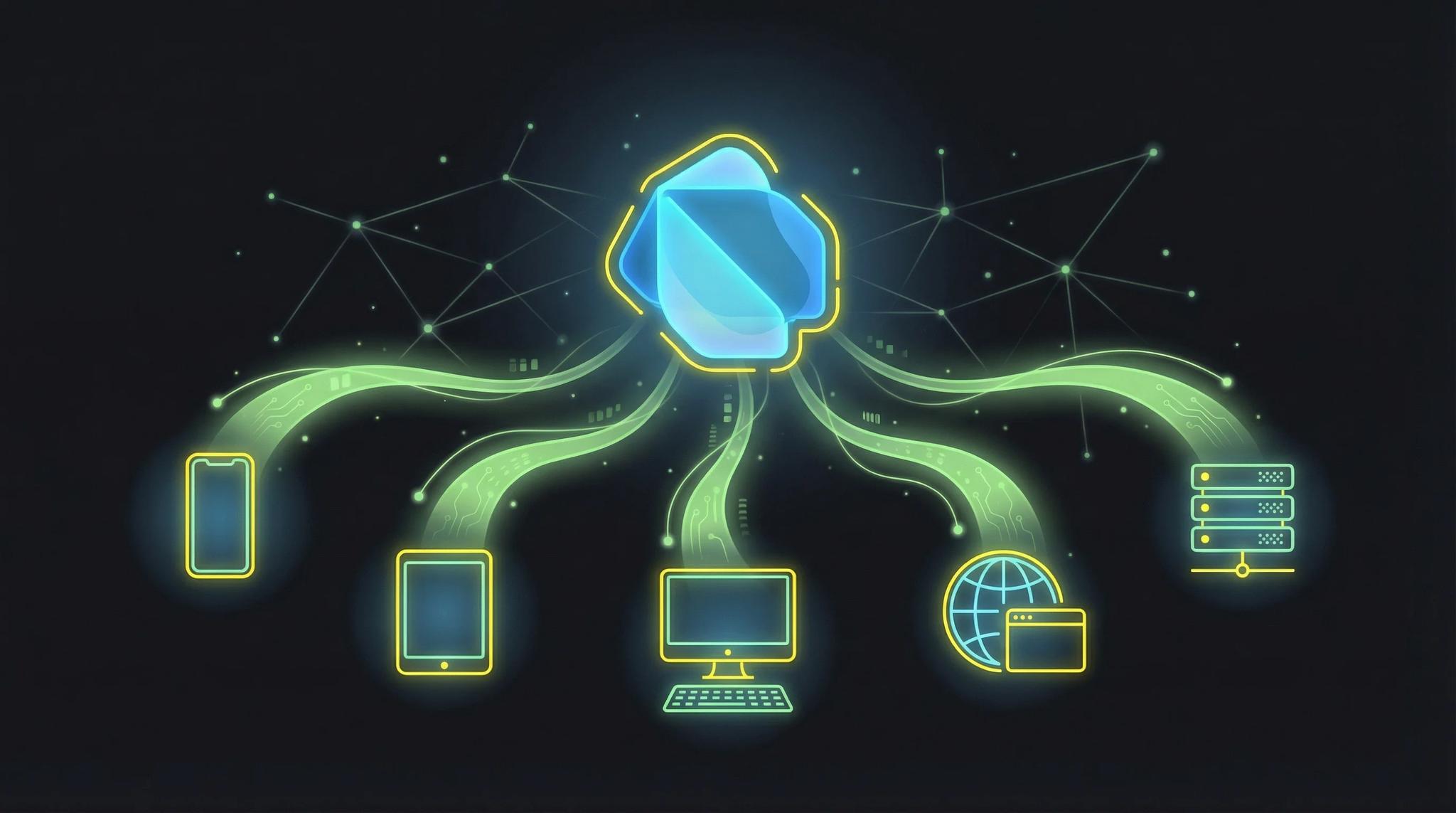
The Full-Stack Dart Workflow
My current workflow looks like this:
┌─────────────────────────────────────────────┐
│                   Dart                       │
├─────────────────────────────────────────────┤
│  Flutter          │  Serverpod              │
│  ─────────        │  ──────────             │
│  iOS App          │  REST APIs              │
│  Android App      │  WebSockets             │
│  Web App          │  Database               │
│  Desktop App      │  Auth                   │
│                   │  Background Jobs        │
├─────────────────────────────────────────────┤
│          Shared Types & Models              │
└─────────────────────────────────────────────┘
One language, one ecosystem, one team. Fix bugs once and they're gone everywhere.
Real Talk: What's Not Perfect
Flutter and Serverpod aren't flawless. Here's what you should know:
Flutter
- Package quality varies: The ecosystem is smaller than React Native's. Some packages are excellent, others half-finished.
- Web performance: Flutter Web is meant for apps, not content websites. SEO is difficult.
- Bundle size: Flutter apps are larger than native apps. Not a drama on modern phones, but measurable.
- Recruiting: Fewer Flutter developers on the market than Swift/Kotlin specialists.
Serverpod
- Young ecosystem: Serverpod is newer than Express, Django, or Spring. Fewer Stack Overflow answers, fewer battle-tested libraries.
- Hosting: You need your own hosting (VPS, Cloud), no serverless out-of-the-box.
- Community: Growing fast, but still smaller than established backend frameworks.
Still: for most projects, the advantages clearly outweigh these.
When Does Flutter + Serverpod Make Sense?
Good fit for:
- Mobile apps that should run on iOS and Android
- Projects where a small team needs to deliver quickly
- MVPs and startups that want to iterate
- Apps with their own backend and real-time features
Less suitable for:
- Pure websites with SEO focus (use Nuxt, Astro, or Next.js)
- Projects deeply integrated with native platform features (AR, certain hardware)
- Teams that already have an established backend in another language
What I've Built With It
In recent years, I've worked on the following with Flutter + Serverpod:
- Digital learning platforms with thousands of active users
- B2B apps for enterprises
- Prototypes that became MVPs within a few weeks
The speed at which we go from idea to working product would have been impossible with separate stacks.
Conclusion: Why I Love Flutter
Flutter gave me back the joy of app development.
No more double work. No constant jumping between languages. No fear of the next platform-specific bug.
Instead: one language that I keep mastering better. An ecosystem that's growing fast. And the freedom to focus on what really matters: building good products.
Serverpod completes the picture. Full-stack Dart isn't a gimmick, it's a serious productivity boost. Where Flutter is heading in 2026 is in the Flutter roadmap 2026.
If you're currently considering having an app developed, or wondering how long app development really takes, feel free to ask about a Flutter + Serverpod stack. It could make your project faster and cheaper.
And if you're a developer yourself: try it out. The learning curve is gentle, and after a few weeks, you won't want to go back either.