
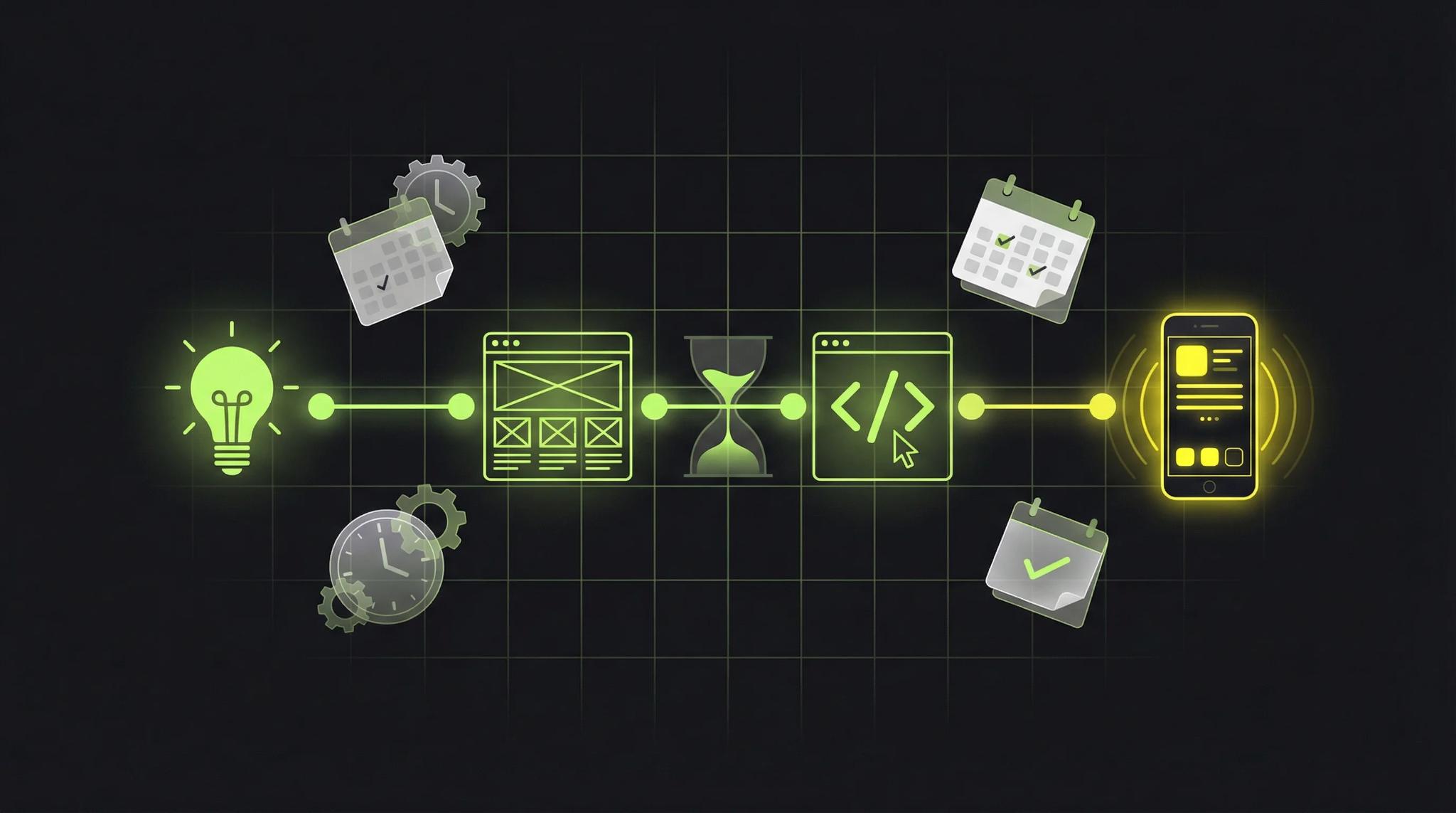

App development is exciting and messy. Here we break down the main phases, realistic timelines, and how tools like Flutter can speed things up.
Before writing a single line of code, you need a solid idea. Validating ideas early helps you figure out whether anyone actually needs what you want to build. Skip this step, and you risk spending months on something nobody wants.
So how long does app development actually take? That depends on a lot of things. This article walks through the key phases, from planning to launch, and what affects how long each one takes.
Speed matters for getting to market, which is why agile methods like Scrum have become standard. They let teams adapt as requirements shift. Whether you use an app builder or hire a dedicated development team also changes the timeline, cost, and end result significantly.
Prototypes and wireframes help you visualize the interface before full development begins. They are worth the upfront time because catching usability problems early is far cheaper than fixing them later.
Your choice of platform (iOS, Android, or both) affects both development time and ongoing maintenance. The experience of your developers, the features you need, and how much you are willing to compromise on scope all shape the final timeline. Most teams work with agencies or freelancers to fill gaps in expertise.
Introduction to App Development
App development is more than just writing code. Every project moves through several phases, from the first idea to publishing in the App Store, and each one needs planning.
The hard part is balancing time, cost, and quality. A feature-heavy app with custom animations will take longer than a simple utility tool. That sounds obvious, but many teams underestimate it.
A realistic schedule and honest resource assessment help you avoid the classic trap: launching late, over budget, and missing features. Knowing what each phase involves gives you more control over the process.

Important Phases in the Process
Every app goes through roughly the same stages. Here is what each one looks like in practice.
- Ideation and Conception: You define the idea and build a shared understanding of the project. Everyone involved, developers, designers, stakeholders, needs to agree on what you are building and why. This usually takes a few days to a couple of weeks.
- Design and Prototyping: Wireframes and clickable prototypes come together here. Designers work with developers and the client to refine the interface before any real coding begins. Getting feedback at this stage saves a lot of rework later.
- Development and Testing: This is where the actual code gets written and tested. Teams typically work in sprints, building features iteratively so they can adjust based on feedback. Native features like push notifications get added during this phase. Working with an experienced development partner helps keep things on track.
- Launch and Maintenance: Publishing to the app stores means following their guidelines carefully. Once the app is live, you need a system for handling bug reports and user feedback. Ongoing updates and maintenance are part of the deal.
The type of app you build (native, web, progressive web app, or hybrid) affects which technologies you use and how much maintenance you will need. This decision should happen early, based on your audience and budget.
Factors Influencing Development
How long your app takes to build depends on a few things:
- Complexity: A social media app with real-time chat, media uploads, and user profiles takes far longer than a simple calculator.
- Team experience: A team that has built similar apps before will move faster and hit fewer dead ends.
- Technology choices: Modern frameworks can cut development time. Custom requirements or niche integrations add time.
- Clear requirements: Vague specs lead to rework. The more precisely you define what you need upfront, the fewer surprises you will face later.
When everyone on the team understands the goals and scope, development goes smoother. That sounds simple, but miscommunication is one of the biggest time sinks in real projects.
Timeframe for App Development Time
As a rough guide: simple apps take about 2-3 months, while complex projects can run 6-12 months or longer. The range is wide because it depends on feature scope, platform choices, and team size.
You can speed things up with agile workflows and modern frameworks. Prioritizing features early and keeping the team aligned with regular check-ins also helps avoid wasted effort.
But faster is not always better. Cutting corners on testing to save a week usually costs you more time in bug fixes after launch.
For a deeper look at the full app development process, including cost breakdowns and best practices, check out our detailed guide.
The Importance of Quality Assurance
Quality assurance is the phase that teams most often underestimate. Testing catches bugs before your users do. That matters because a buggy launch can tank your app store ratings fast.
A solid test plan covers functionality, performance, and security. Manual testing and automated tests each have their place. The goal is an app that works reliably, not just one that looks good in a demo.

Advantages of Flutter for Development Duration
Flutter is Google's UI toolkit for building apps from a single codebase. Instead of maintaining separate iOS and Android projects, you write the code once and deploy to both platforms.
The practical benefit is time savings. You skip the work of building and maintaining two separate apps. For many projects, that alone cuts development time by 30-40%.
Flutter comes with a large library of pre-built widgets, which speeds up prototyping. The hot reload feature lets you see code changes instantly without restarting the app, so the feedback loop during development is very fast.
It is not perfect for every use case, but for most business apps, it is a solid choice that gets you to market quicker.